Ed van der Elsken Exhibition - my takeaways…
The Rijks Museum currently have an exhibition featuring the Dutch photographer, Ed van der Elsken which I went to see a few days ago.
If you haven’t heard, or come across this photographer (1925-1990), you can read more about him through these links above.
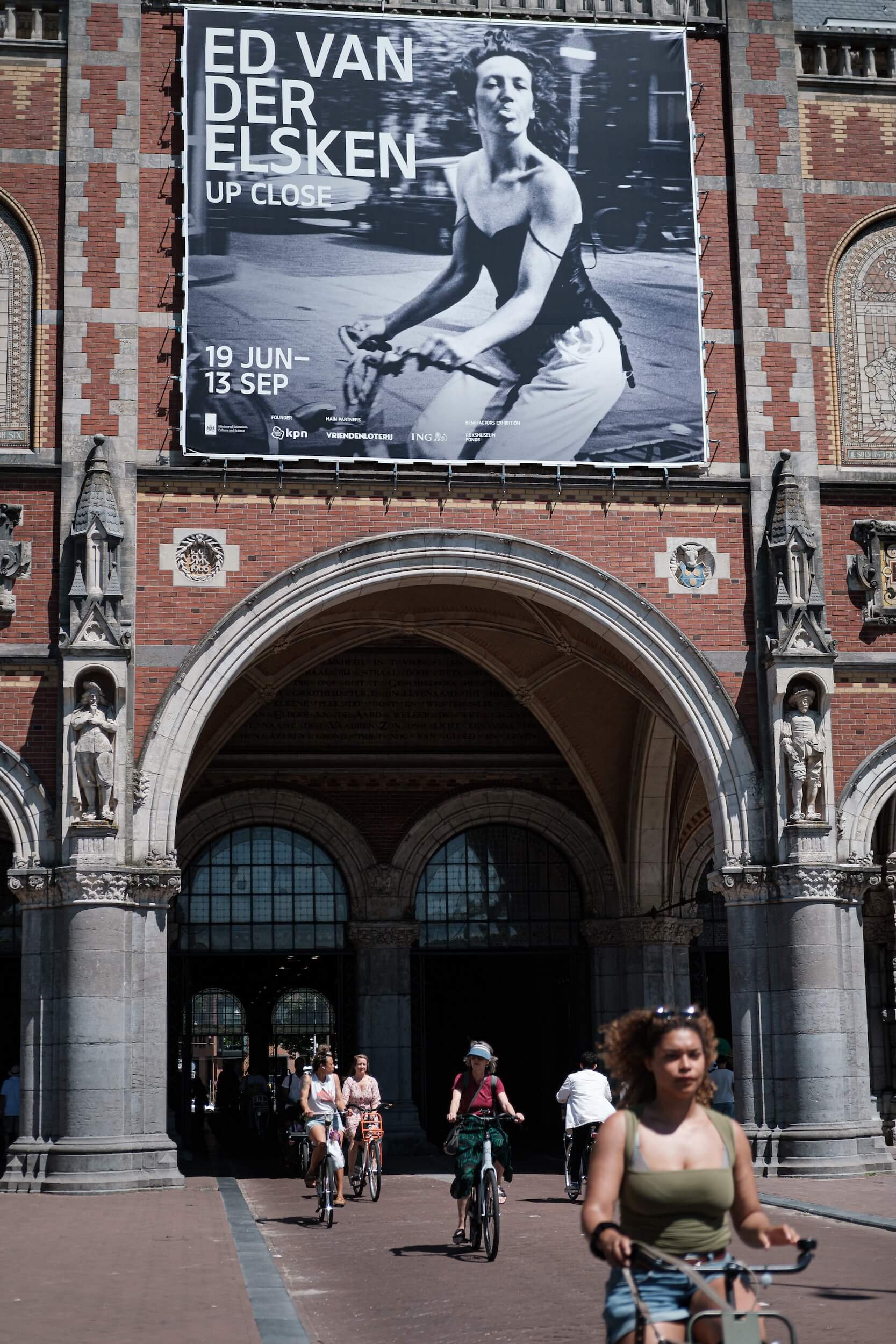
Unfortunately I couldn’t get any of these passing cyclists to stick out their tongue!
I resonated with many things in the exhibition. Mainly because of the era he was born into and photographed. Born just a few months before my own father, he lived in the era of B&W film photography before colour came into being in a major way.
The era of the Darkroom - not Lightroom!. My own father built his darkroom in the attic of our house (after having broken a few ribs first by falling through the ceiling in the process!) and a place I remember well joining him - and learning - the art of developing.
Van der Elsken though was in a different league. Dodging and burning extensively. Cropping. And not afraid of manipulating many of his images into final photographs the way he wanted. I’ll return to this later.
He was an artist - and a creator.
The main takeaways for me which I write down immediately afterwards were:-
3 images from a single shot with the outermost two people (one each side of the original photo) taken, enlarged, and reversed mirror style
bodies of work. Many. But also many single shots seemingly unlinked, but always in his style
have I mentioned cropping?
not afraid of grain and soft focus to the extent of blur…
not afraid to combine colour (when it was available) with his B&W collections
didn’t work well (at the outset anyway) with commissioning editors but preferred to do his own thing - resulting initially in him living in pretty basic conditions in Paris with his partner who supported him, lent him cameras etc.
However it was the amount of darkroom tweaking, editing and what is often referred to these days as processing (like moving a few sliders), that really struck me. Dodging and burning - i.e. under and over-exposing certain parts of the image to generate significant tonal differences drawing the eye to the lighter parts, as well as cropping heavily.
These days there is significant debate as to how much is “allowed” when processing in LR as if we’re somehow trying to get back to the days of purity. Some photographers make it a thing to say SOOC (straight out of camera) or similar. The last thing - from what I observed looking at the many contact sheets displayed in the exhibition - was that van der Elsken kept trying to be “pure”.
He relied heavily on manipulating images in the darkroom. B&W’s that is. Colour was outside his control pretty much being processed in a lab - and which he recognised. He knew what he wanted and wasn’t afraid of darkroom “tricks” to achieve this.
Leaving AI aside - LR (as well as other digital imaging platforms) is already there in terms of the ability to significantly alter a photo from its original. Erasing people and objects etc. I won’t say I’ve never erased an annoying power line in a photo but never people or significant objects.
Modern day equivalents of dodging and burning are easily facilitated by the amazing masking abilities.
But removing people and objects - that’s my red line. What’s yours?