Creativity in Chaos
Although I’ve nothing planned, the next time I’m in Madrid I want to visit the Museo Nacional Centro de Arte Reina Sofía .
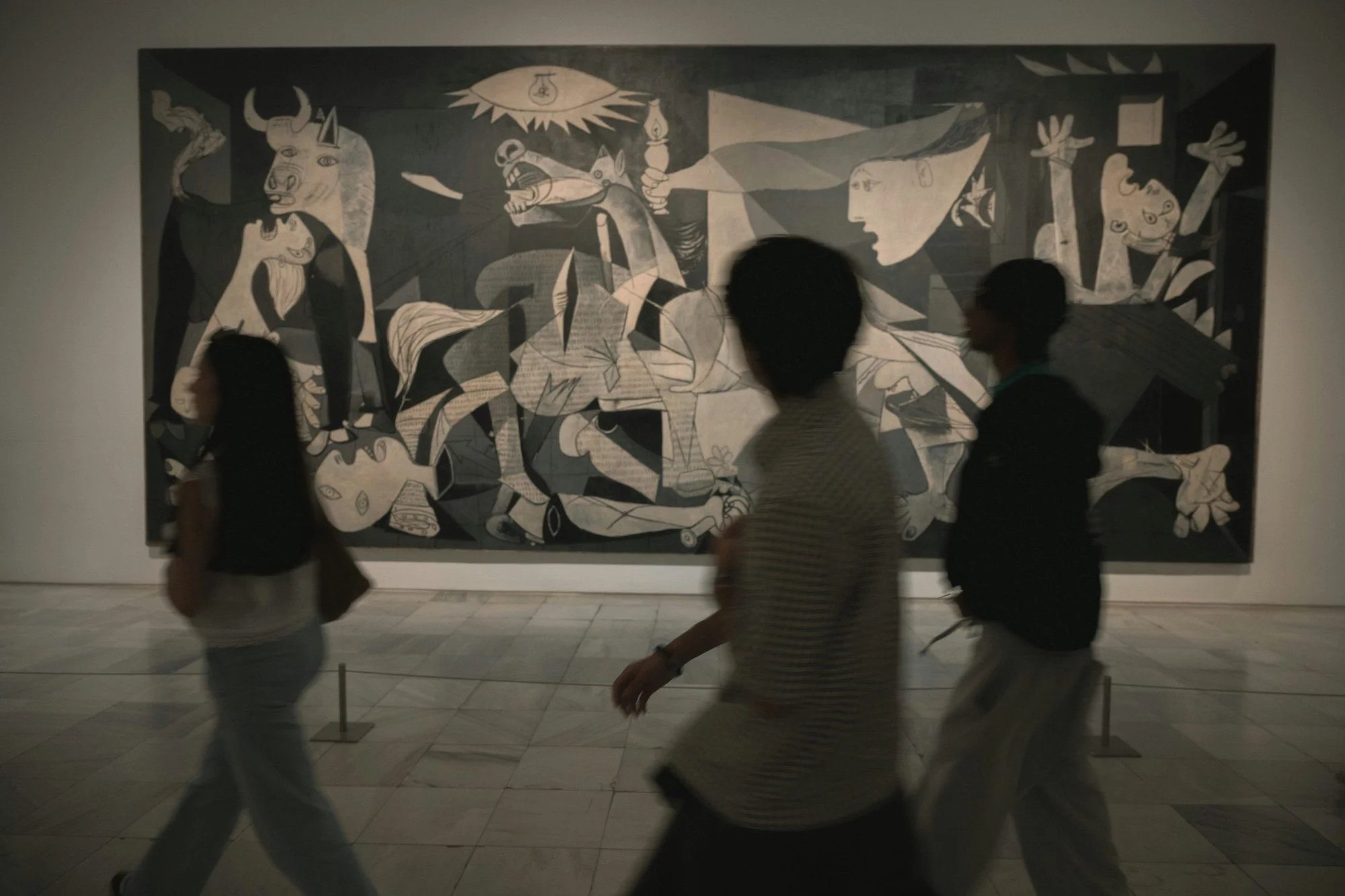
Of all the images (including photographs) crafted during a time of utter chaos, Guernica is probably the most powerful anti-war image in history.
Painted in response to the April 1937 German aerial bombing of the town of Guernica during the Spanish civil war in support of Franco, this huge 27 m2 black, grey and white painting was completed by Picasso in 35 days in early June of 1937.
During this time, Picasso said "My whole life as an artist has been nothing more than a continuous struggle against reaction and the death of art. How could anybody think for a moment that I could be in agreement with reaction and death?"
For those wanting a deeper dive into the historical context and the image itself, I would encourage you to head over to the official website ReThinking Guernica - after (!) you've read this post of course!
The website comments "Transcending the specific event it was based on, Guernica is a timeless, universal symbol, vilifying the implacable and criminal destruction of war, and opening artistic debate on the representation of armed conflict."
Every month a reminder pops up on my iPhone to post another blog article. Often I have pre-empted this with some recent images that I've taken and want to share, or something else has cropped up that I think would make for an interesting post.
All that was nullified however, this month, by the war on (in?) Iran. Completely saturating the global news, I’m finding it difficult to think of anything creative when there is so much chaos going on.
Which got me thinking about the whole area of creativity in times of chaos and conflict.
? Does chaos and conflict stymie artistic creativity or generate it?
? Does it alter the visual impact of what is produced?
? And - ultimately - does art have any impact on the duration of the conflict? Like can it stop a war?
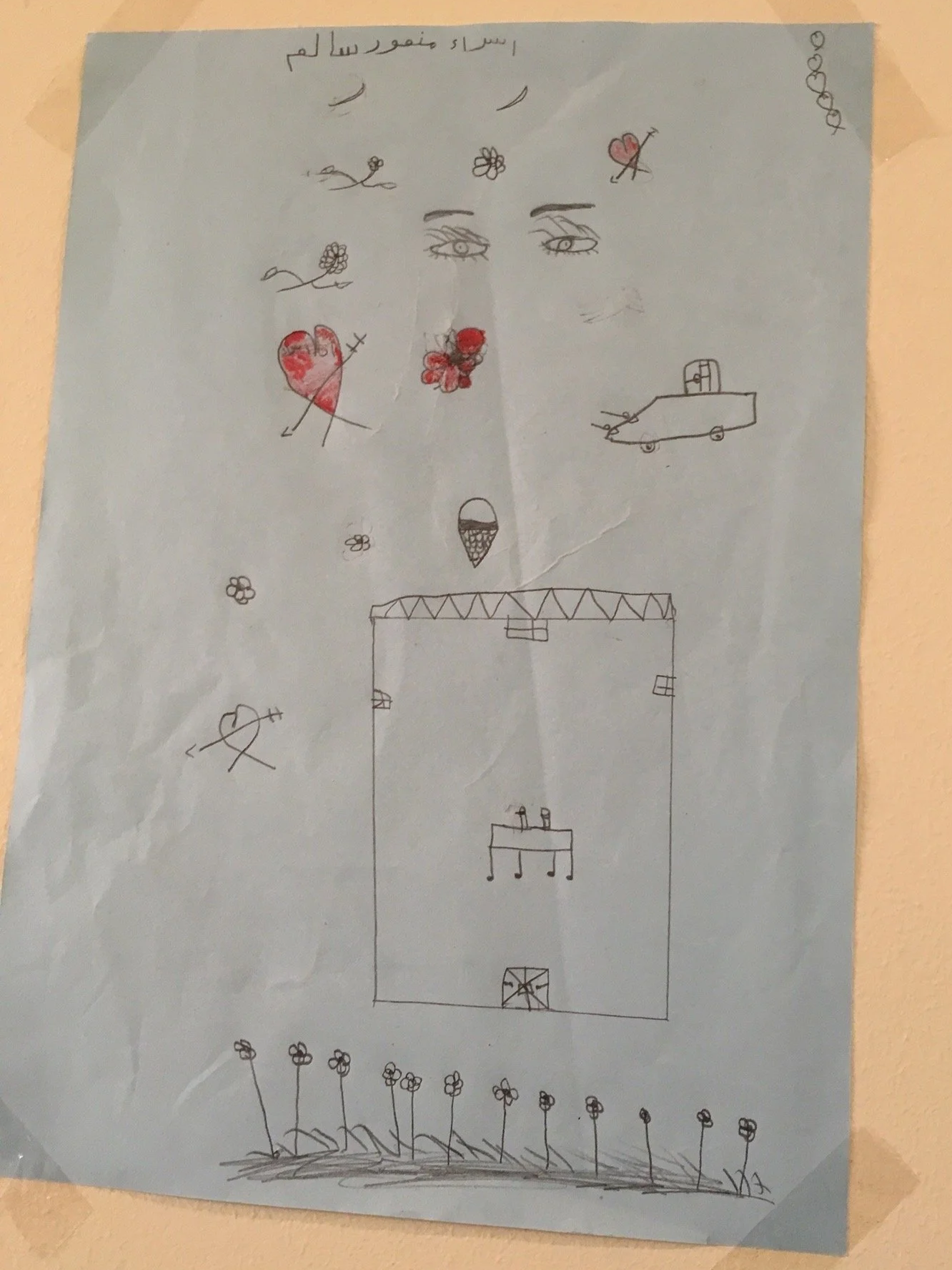
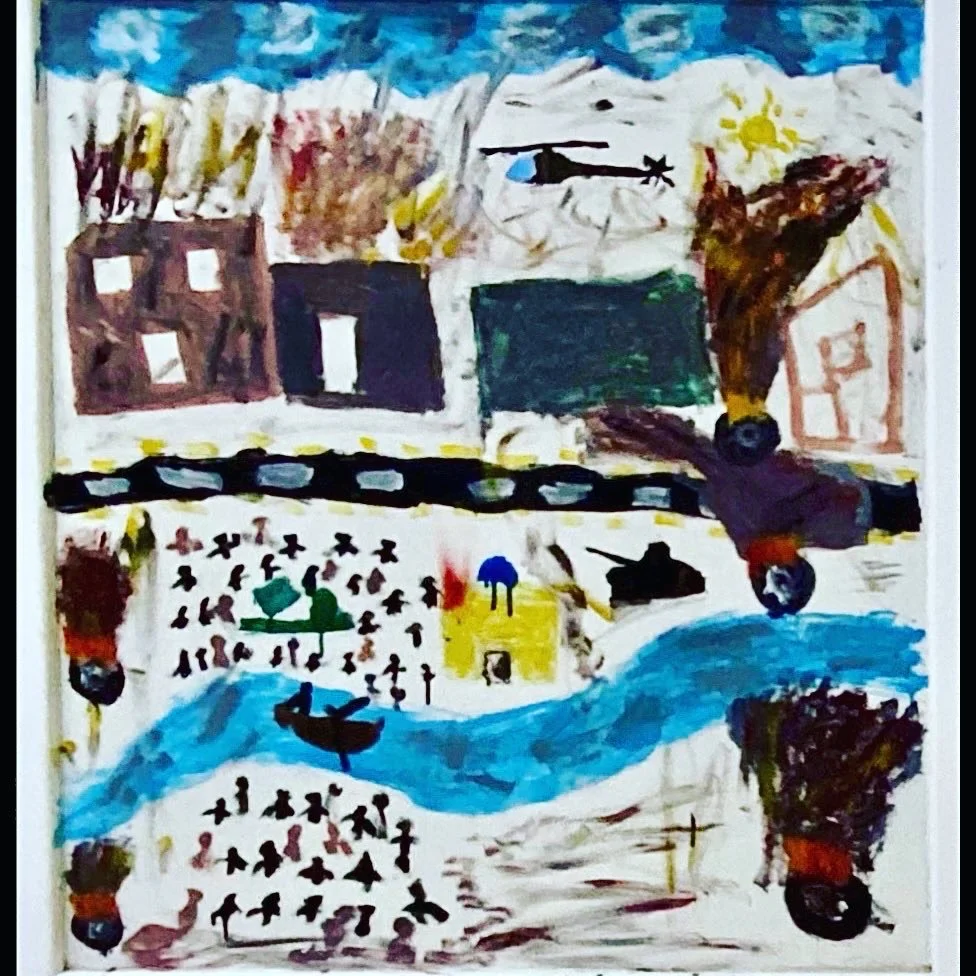
As with Picasso, and evidenced by children that lived in Mosul during the entire time of ISIS (my photos of childrens drawings from Mosul above), conflict changes the subjects depicted but creativity lives on. Indeed during the siege of Sarajevo in the mid 90's, artists continued to create underground whilst musicians performed concerts with the background noise of sniperfire. In this context, art becomes a tool for survival.
Not just a mechanism for survival itself, but often a weapon of resistance. Graffiti on the walls of Mosul documented by Ali Al-Baroodi as well as Banksy’s Palestine, express messages of hope, resistance and national identity.
Creating in times of chaos also allows those directly impacted to create memories; give a sense of control when there is so much outside their direct control; allow healing through visual expression; and act as a connector to each other through a positive shared experience.
In fact the more I consider, the more that could be written from a gender perspective - thinking of Afghani womens art and carpet making - as well as how art can act as memorial to those that have been killed in the conflict. I don't have to think very hard to remember all the murals in west Belfast and Derry of the hunger strikers that died (e.g. Bobby Sands etc) during the Troubles.
Can art actually stop a conflict? I don't think anyone could argue that it has done, or will do, but what art (and again I'm including photography here as well) can do is preserve truth, sway public opinion, demonstrate that there is humanity on all sides of the divide and ensure that memory of the conflict is not forgotten.
All this to say - keep creating [note to self here]. What we depict during these times may well change and adapt from our norm - but the important thing is to maintain a creative spirit regardless.
And remember - next time in Madrid...